
a Natural-Looking Bridge
and chewing function seamlessly.
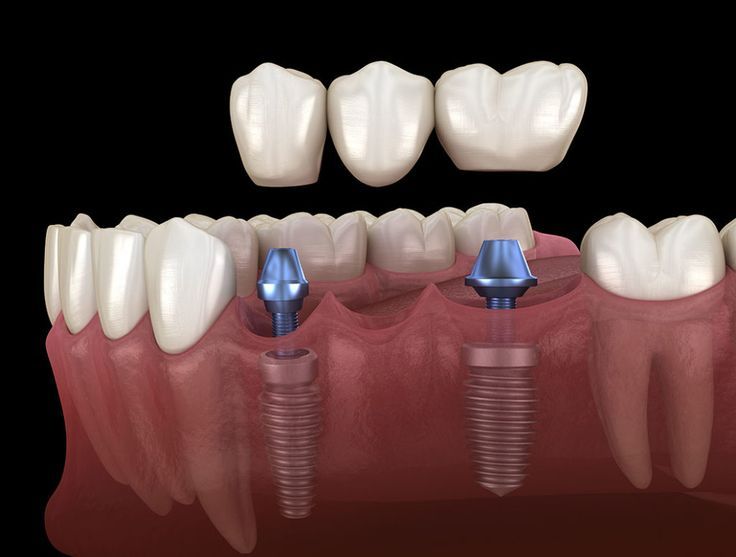
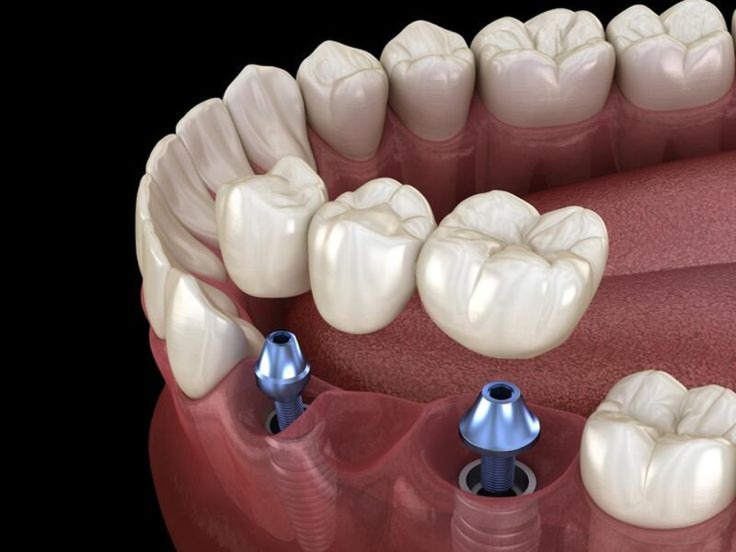
✓ Prevent Teeth Shifting – Stop adjacent teeth from drifting out of place
✓ Preserve Proper Bite Alignment – Prevent stress on jaw joints and muscles
✓ Maintain Facial Structure – Help prevent bone loss and sunken appearance
✓ Restore Full Function – Chew and speak with ease and confidence
✓ Protect Natural Teeth – Stabilize teeth on either side of the gap
✓ Digital Planning & Impressions – Comfortable 3D scanning, no messy molds
✓ High-Strength Zirconia – Incredibly durable for long-lasting results
✓ Premium Ceramics – Natural-looking materials that blend invisibly
✓ In-House Master Lab – Artisanal craftsmanship for superior results
✓ Long-Lasting Solution – Durable restoration designed to last a decade or more
✓ 25+ Years of Expertise – Precision placement and meticulous fitting
The Implant-Supported Bridge: The Gold Standard for Permanent Tooth Replacement
Losing multiple teeth creates a ripple effect that goes beneath the surface. While a traditional bridge solves the immediate aesthetic issue, it relies on neighboring teeth for support. An implant-supported bridge represents the pinnacle of restorative dentistry, offering a self-sustaining, rock-solid solution that doesn’t just fill a gap—it restores the very foundation of your oral health.
Unlike traditional methods, this advanced restoration uses dental implants as anchors rather than your natural teeth, providing unparalleled stability without compromising the integrity of your remaining smile.
Why Choose an Implant-Supported Bridge?
By mimicking the root system of natural teeth, an implant-supported bridge provides benefits that traditional prosthetics cannot match:
Bone Health Preservation: Implants provide the necessary stimulation to the jawbone, preventing the bone resorption and “sunken” facial appearance often caused by tooth loss.
Protection of Healthy Teeth: Traditional bridges require “prepping” (shaving down) healthy adjacent teeth to act as anchors. Implant bridges leave your natural teeth untouched.
Superior Stability: Because they are fused to the bone, these bridges do not slip or shift, allowing for a full, unrestricted diet.
Life-Changing Comfort: The bridge feels like a natural part of the anatomy, eliminating the gum irritation sometimes associated with removable appliances.
The Clinical Process: Engineering a Seamless Result
The transition to an implant-supported bridge is a multi-stage journey focused on surgical precision and digital sophistication.
3D Diagnostic Mapping: The process begins with CBCT (Cone Beam Computed Tomography) to create a high-resolution 3D map of the jaw. This identifies the precise density of the bone and dictates the exact placement of the implants for maximum support.
Guided Implant Placement: Using digital surgical guides, the implants—typically made of titanium or zirconia—are placed with micro-millimeter accuracy. These act as the new “roots” for the bridge.
Osseointegration (The Healing Phase): Over several months, the implants naturally fuse with the jawbone. During this time, a high-quality temporary restoration is worn to ensure aesthetics and function are maintained.
Digital Intraoral Scanning: Once healing is complete, an intraoral digital scanner captures a 3D model of the implants. This replaces traditional putty molds, providing far more accurate data for the dental laboratory.
Final Restoration: Master ceramists craft a custom bridge from high-translucency zirconia or premium ceramics. This bridge is then securely attached to the implants, creating a finish that is virtually indistinguishable from natural teeth.
Artistry Meets Durability
The materials selected for an implant-supported bridge are designed to withstand heavy mechanical forces while appearing flawlessly natural:
Monolithic Zirconia: Renowned for its extreme durability, this material is ideal for multi-unit bridges, providing the structural integrity needed for the back of the mouth.
Hand-Layered Porcelain: To ensure the bridge matches the unique character of the surrounding teeth, porcelain is layered to mimic the translucency, light-reflection, and color gradients of real enamel.
A Long-Term Investment
An implant-supported bridge is a long-term investment in quality of life. While traditional bridges often require replacement after a decade, dental implants are designed to be a permanent solution. With proper oral hygiene and regular professional care, this restoration provides a lifetime of confidence, strength, and health.